
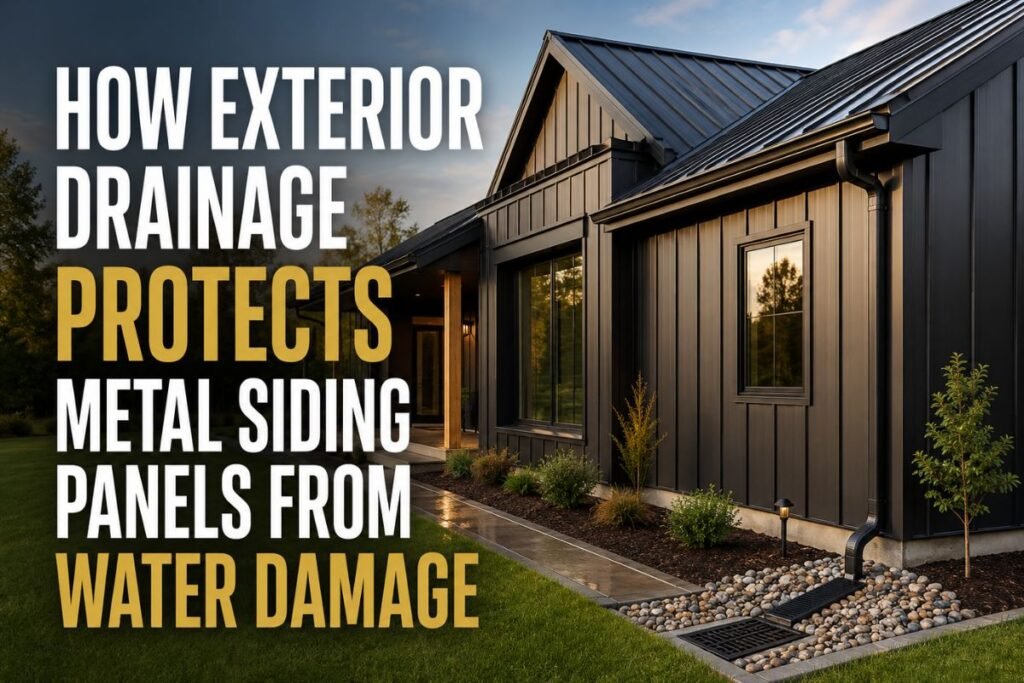
Exterior drainage is one of those home features people often ignore until something goes wrong. Gutters, downpipes, surface drains, and proper grading may not look as exciting as a fresh exterior finish, but they quietly protect your home every day. When rainwater moves away from the building correctly, your walls, foundation, roofline, and siding stay much safer.
This matters even more when a home has modern exterior cladding. Metal siding panels are strong, stylish, and low-maintenance, but they still need proper water management around them. If water keeps running down the walls, collecting near the base, or splashing back from the ground, even a durable exterior system can face staining, corrosion risks, sealant failure, moisture intrusion, and hidden wall damage over time.
Why Exterior Drainage Matters for Modern Homes
Exterior drainage controls where rainwater goes after it lands on your roof, driveway, patio, garden, or surrounding ground. Without a good drainage system, water does not simply disappear. It follows gravity, gathers in low spots, runs along walls, enters gaps, and puts pressure on the weakest parts of the building.
For homes with exterior panels, this can create several problems. Water can sit around panel edges, trims, fasteners, joints, and lower wall sections. If the drainage problem continues, moisture may work behind the siding or damage the protective layers beneath it. The siding may still look fine from a distance, but the structure behind it can slowly become vulnerable.
Good drainage protects both the visible exterior and the hidden building envelope. It keeps water moving away from the home instead of letting it settle where it can cause long-term issues.
How Water Can Damage Exterior Siding
Rainwater is not always harmless. A short shower may not create problems, but repeated exposure in the wrong areas can lead to damage. The biggest issue is not usually rain hitting the wall directly. It is water that has nowhere to go.
Water damage often starts in small ways. You may notice streaks, dirt marks, damp patches, peeling sealant, or moisture near the bottom of the wall. Over time, these small signs can turn into bigger concerns.
Common water-related siding problems include:
| Problem | What Causes It |
| Staining | Dirty water running down the same wall sections |
| Corrosion risk | Prolonged moisture exposure around scratches, edges, or fasteners |
| Sealant failure | Constant wetting and drying around joints |
| Mould or mildew nearby | Damp surfaces with poor airflow |
| Water behind panels | Failed flashing, bad drainage, or blocked outlets |
| Foundation dampness | Water pooling near the base of the home |
Even strong materials need the right conditions to perform well. Proper drainage helps create those conditions.
Gutters Keep Roof Water Away From Walls
Gutters are one of the first lines of defence. Their job is simple. They collect rainwater from the roof and direct it into downpipes. When they work properly, water does not pour over the roof edge and run down the siding.
Blocked or damaged gutters can cause serious problems. Leaves, moss, dirt, twigs, and roof debris can stop water from flowing. When gutters overflow, water spills down the exterior walls. This repeated flow can leave marks, soak trims, and push moisture into small gaps.
For homes with metal exterior finishes, gutter maintenance is especially important. Overflowing water can create vertical staining and keep certain panel areas wet for too long. If water hits the same section again and again, that area becomes more exposed to wear.
Regular gutter cleaning helps prevent this. Homeowners should check gutters after autumn leaf fall, after storms, and before long rainy seasons. A clean gutter system protects the siding, roofline, fascia, and foundation at the same time.
Downpipes Move Water Safely to the Ground
Downpipes carry water from the gutter to ground level. But they must discharge water in the right place. If a downpipe empties directly beside the wall, the water can splash onto the siding and collect around the foundation.
This is a common problem. The gutter may be clean, but the downpipe outlet may still be too close to the home. Water then pools at the base, soaks the soil, and increases moisture around the lower panels. In cold weather, this can also create ice patches near paths or entries.
A good downpipe setup should move water away from the building. It may connect to a surface drain, soakaway, rainwater system, or extension that sends water several feet away from the foundation. The exact solution depends on the property layout, soil type, and local drainage setup.
The important point is simple. Water should never be allowed to sit against the house.
Surface Grading Helps Water Flow Away
The ground around your home should slope away from the building. This is called grading. It may sound basic, but it has a huge impact on exterior moisture control.
If the ground slopes toward the house, rainwater naturally moves toward the walls. This can create standing water near siding, doors, patios, and foundations. Even if your gutters and downpipes work well, poor grading can still cause water problems.
A gentle outward slope helps water drain away before it has time to collect. This protects the bottom edge of siding, wall trims, damp-proof courses, basement areas, and foundations. It also reduces splashback from soil and paving.
Watch for low spots near the home after heavy rain. If puddles stay close to the wall for hours, the grading may need attention.
Splashback Can Affect Lower Wall Panels
Splashback happens when rain hits hard ground and bounces back onto the lower wall. This is common around patios, concrete paths, gravel strips, driveways, and compacted soil. Over time, splashback can leave dirt marks and keep the lower siding damp.
This is one reason the bottom section of exterior walls often shows wear first. The lower panels face more moisture, more dirt, and more contact with landscaping.
You can reduce splashback by improving drainage and softening the ground surface near the wall. Gravel strips, proper edging, planting beds, and controlled water flow can help. The key is to stop water from hitting the ground hard and bouncing back repeatedly.
A clean gravel border can be very effective when installed properly. It allows water to drain down instead of splashing upward, while also giving the exterior a tidy finish.
Flashing and Drainage Work Together
Flashing is the material used around joints, windows, doors, roof edges, and transitions to direct water away from vulnerable areas. Even the best siding needs good flashing. Drainage and flashing work as a team.
If flashing is missing, damaged, or poorly installed, water can slip behind the siding. Once water gets behind exterior panels, it may not dry quickly. This can lead to hidden moisture problems in sheathing, insulation, framing, and interior walls.
Good flashing should guide water outward and downward. Good drainage should then carry that water away from the building. When both systems work together, the exterior stays much better protected.
Pay close attention to windows, doors, roof-to-wall junctions, and places where siding meets masonry, decking, or extensions. These areas are common moisture entry points.
Drainage Around Patios and Driveways
Patios and driveways can cause water problems if they slope toward the house. Since these surfaces are hard and often large, they can send a lot of rainwater toward exterior walls very quickly.
A patio that sits too high against the siding can also be risky. If paving is close to or above the lower wall protection line, water may splash or collect where it should not. This can affect the bottom edges of panels and increase dampness around the base of the structure.
Channel drains, correct paving slope, permeable surfaces, and proper patio edging can all help. If water regularly gathers near doors, siding, or wall corners, the drainage design should be reviewed.
A clean exterior look is not only about materials and colours. It also depends on practical details that keep the building dry and tidy.
Landscaping Should Not Trap Moisture
Plants, mulch, and garden beds can make a home look softer and more attractive, but they should not trap moisture against the walls. Thick planting directly against siding can reduce airflow and hold dampness after rain.
Mulch can also create problems if it is piled too high. Organic mulch holds moisture, and when it sits against the bottom of the exterior wall, it can keep the area damp for long periods. This is not ideal for any siding system.
Keep a clear gap between landscaping and the wall. Choose plants that allow airflow. Avoid soil or mulch building up against the siding. If you want greenery near the home, use controlled borders and keep the drainage path open.
Good landscaping should support the home, not create moisture pressure against it.
Signs Your Drainage May Be Putting Siding at Risk
Homeowners can often spot early warning signs before major damage happens. The sooner you notice drainage problems, the easier they are to fix.
Look for signs like:
| Warning Sign | What It May Mean |
| Water overflowing from gutters | Blockage or poor gutter slope |
| Puddles near the wall | Poor grading or drainage |
| Streaks on siding | Water flowing repeatedly over panels |
| Damp patches near the base | Splashback or pooling water |
| Soil erosion under downpipes | Water discharge too close to home |
| Mould near exterior walls | Long-term dampness and poor airflow |
| Rust marks around fixings | Moisture exposure around vulnerable points |
| Water near doors or thresholds | Patio or paving drainage issue |
These signs do not always mean severe damage has occurred. But they do mean the drainage system needs attention.
Maintenance Tips to Protect Exterior Panels
A few simple habits can protect your exterior siding and prevent expensive repairs later. You do not need to overcomplicate it. Consistent maintenance is usually enough to catch most problems early.
Clean gutters regularly, especially after autumn and storms. Check downpipe outlets and make sure water flows away from the home. Look for puddles after heavy rain. Keep soil, mulch, and plants away from the lower wall. Wash dirt from exterior panels when needed, using a gentle method recommended for the material.
Also inspect sealants, trims, flashing, and panel edges. If you see gaps, cracks, loose fixings, or signs of water entry, deal with them early. Small repairs are much easier than hidden moisture damage.
When to Call a Professional
Some drainage issues are easy to handle, such as clearing gutters or extending a downpipe. Others need professional help. If water keeps returning to the same area, if drains are blocked, or if dampness appears inside the home, it is better to get expert support.
A professional can assess whether the issue comes from gutters, downpipes, underground drainage, poor grading, blocked drains, leaking pipes, or faulty exterior detailing. This matters because the visible problem may not be the real source.
For example, staining on siding may look like a surface issue, but the cause may be an overflowing gutter above it. Dampness near the base may come from a blocked drain, a broken downpipe connection, or poor ground slope. Fixing the right problem saves money and protects the exterior properly.
Final Thoughts
Exterior drainage plays a major role in protecting your home’s siding from water damage. Gutters, downpipes, grading, flashing, patios, drains, and landscaping all work together to control moisture. When one part fails, water can start moving where it should not.
For homes with modern exterior finishes, this protection is especially important. Strong siding still needs dry conditions, good airflow, and well-managed rainwater. By keeping water away from the walls and foundation, you protect the appearance, structure, and long-term value of your property.
A clean exterior is not only about choosing the right panels. It is also about making sure the drainage behind the design does its job every time it rains.